Insect Portraits is a captivating collection of portrait-style photographs that reveals the remarkable "personalities" of Irish insects and offers a glimpse into the fascinating world of scientific research using these extraordinary creatures.
A few specimens from the book
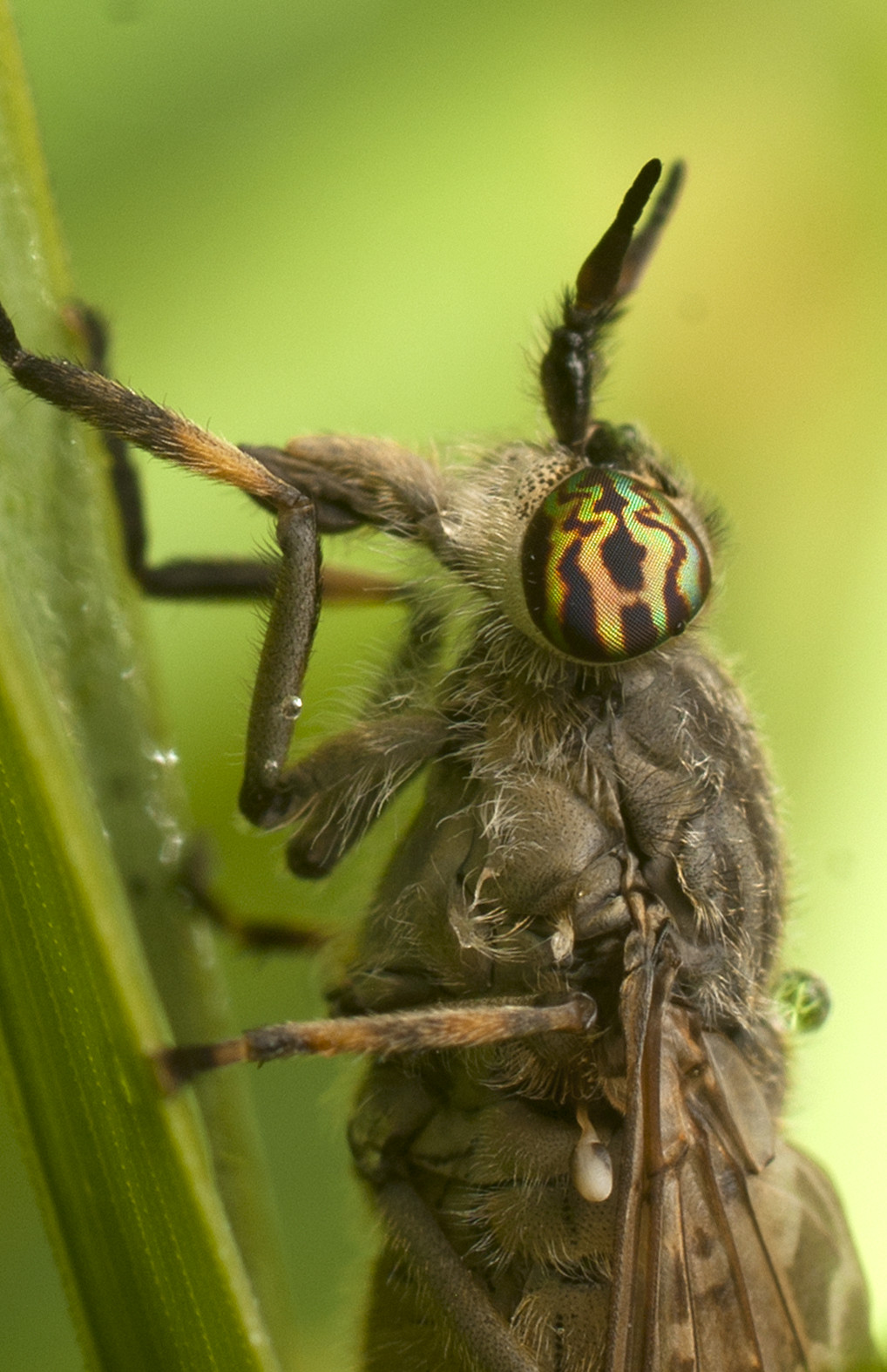
Horsefly
Horseflies bite zebras less frequently than they bite horses and cattle. In a recent study, horses and cattle painted to look like zebras were bitten less often than their non-painted counterparts. One explanation for this is that horseflies’ eyes contain photoreceptor cells that are highly sensitive to light polarisation. The black and white stripes of a zebra are believed to reduce the intensity of polarised light reflected off the animal, making it less visible to the fly. In contrast, the dark, smooth coats of some cows and horses are believed to enhance light polarisation, attracting horseflies. In a similar way, the striped bodypainting practised by indigenous communities in Africa and Australia can deter biting flies. In fact, biting flies may have driven the evolution of striping in animals, as the abundance of biting flies correlates with the presence of stripes in horse species worldwide.
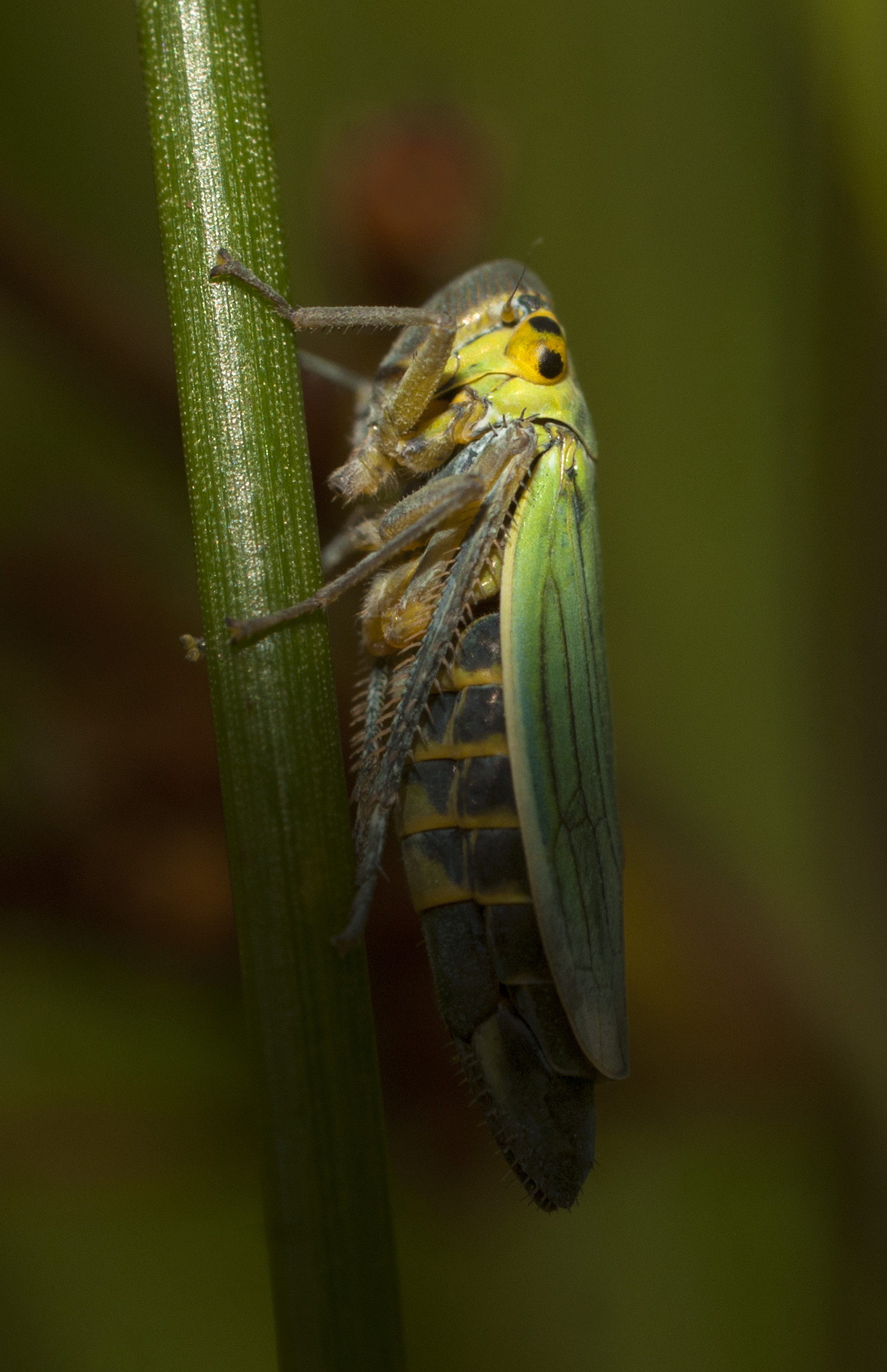
Leafhopper
Leafhoppers are struggling for survival against the intracellular bacterium Wolbachia. In fact, Wolbachia is believed to infect approximately one to five million species worldwide, representing one of the greatest pandemics in the history of life. Male leafhoppers are a ‘dead end’ to this bacterium; it can only be passed to the next generation through the mother. Wolbachia has evolved several mechanisms to take advantage of maternal transmission. In one mechanism, cytoplasmic incompatibility, uninfected female leafhoppers can only produce viable offspring with uninfected males, whereas infected females can produce viable offspring with both infected and uninfected males. Proportionally, this favours the Wolbachia-infected leafhoppers, as it increases their opportunity to produce viable offspring. Wolbachia achieves this by damaging the sperm in males. If the male impregnates a female also infected with Wolbachia, the damage is reversed, and a viable embryo is produced. However, if the male impregnates an uninfected female, the damage is not reversed, and the embryo cannot develop. Cytoplasmic incompatibility can have long-term evolutionary consequences; for example, it is thought it could drive the evolution of new species, by causing sperm–egg incompatibilities between populations.
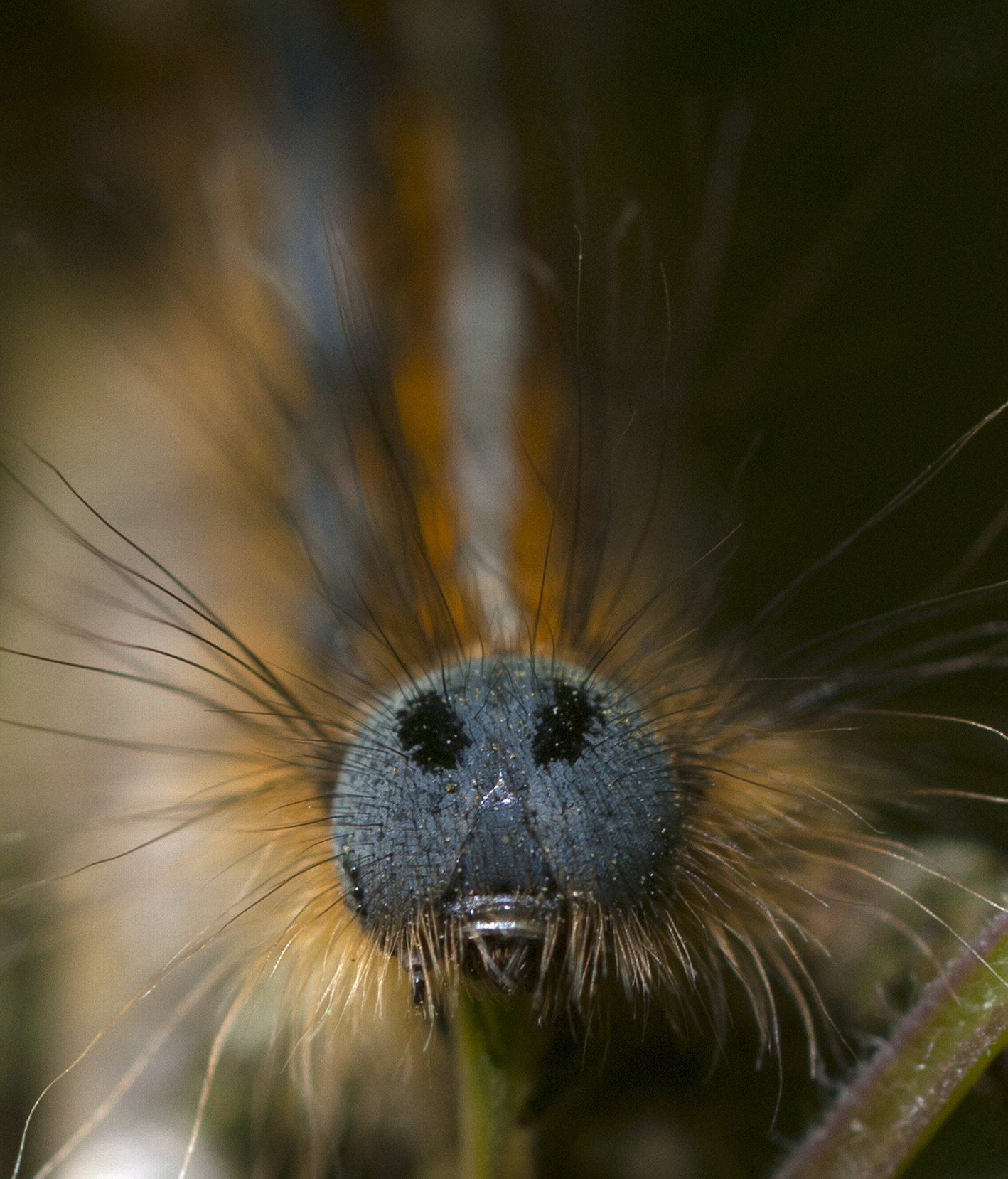
Tent caterpillar
This caterpillar is known as a tent caterpillar, named for the silk tents it builds with its siblings after hatching from their eggs. Outside the tent, the caterpillars are vulnerable to predators. However, the caterpillars have devised a collaborative and visually compelling defence: they incite a flash mob. The caterpillars rear up and vigorously thrash or flick their bodies in synchronicity. This sudden display is believed to make the group appear large and menacing, deterring attacking birds or wasps. In some species, this flicking display is combined with en masse regurgitation of toxic chemicals, which the caterpillars appropriate from the plants on which they feed.
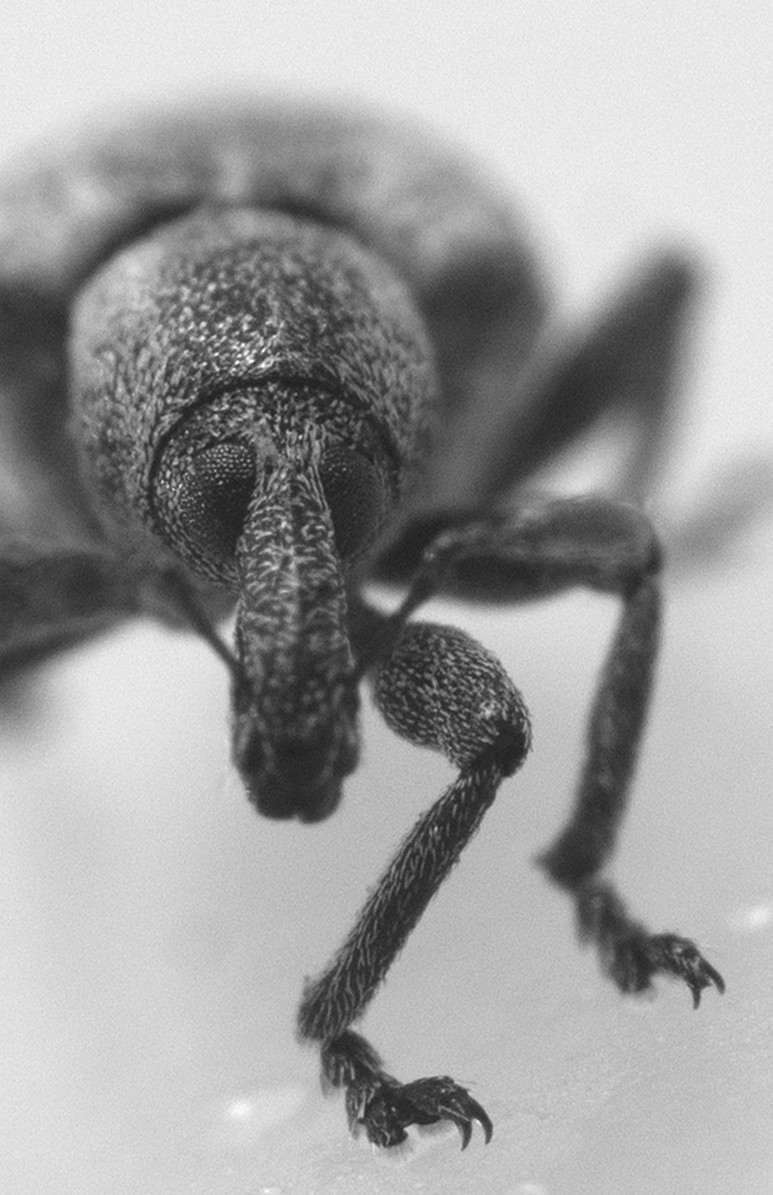
Black vine weevil
In the summer of 1587, the people of St Julien in France brought legal proceedings against the black vine weevil (Otiorhynchus sulcatus) for ‘depredations … and incalculable injury’ on their vineyards. At that time, such cases were tried in ecclesiastical courts under canon law, in accordance with scripture (God’s covenant with Noah in Genesis 9, that is, animals should be held accountable for their crimes to the same extent that humans would). Trials typically ended in excommunication and banishment — an often ineffective punishment in cases involving insects. If a defendant failed to heed the court’s ruling, a formal condemnation was proclaimed, revoking God’s protection, meaning the animals could be exterminated. Forty years prior in St Julien, the weevils cooperatively left the vineyards after public prayers and a promise from the townspeople that they would repent and ‘resolve to live henceforth justly and charitably, and above all to pay tithes’. In 1587, however, stronger measures were required, and the weevils were brought to trial (tried in absentia). The appointed counsel for the prosecution, the distinguished Antoine Filliol, argued for the weevils to be excommunicated, citing previous legal precedents. The weevils’ defender, Pierre Rembaud, argued that the weevils, ‘in taking up their abode in the vines of the plaintiffs, [were] only exercising a legitimate right conferred upon them at the time of their creation’. The proceedings dragged on for several months, and the prosecuting attorney was suspected of trying to keep the suit pending as long as possible. During that time, the townspeople attempted to reach a settlement, offering the weevils a plot of land nearby as compensation. The defence attorney declined the offer, claiming the land was barren and could not adequately support the insects. The ultimate outcome is unknown; ‘the last page of the records [was] destroyed by rats or bugs of some sort. Perhaps the prosecuted weevils, not being satisfied with the results of the trial, sent a sharp-toothed delegation into the archives to obliterate and annul the judgment of the court’.
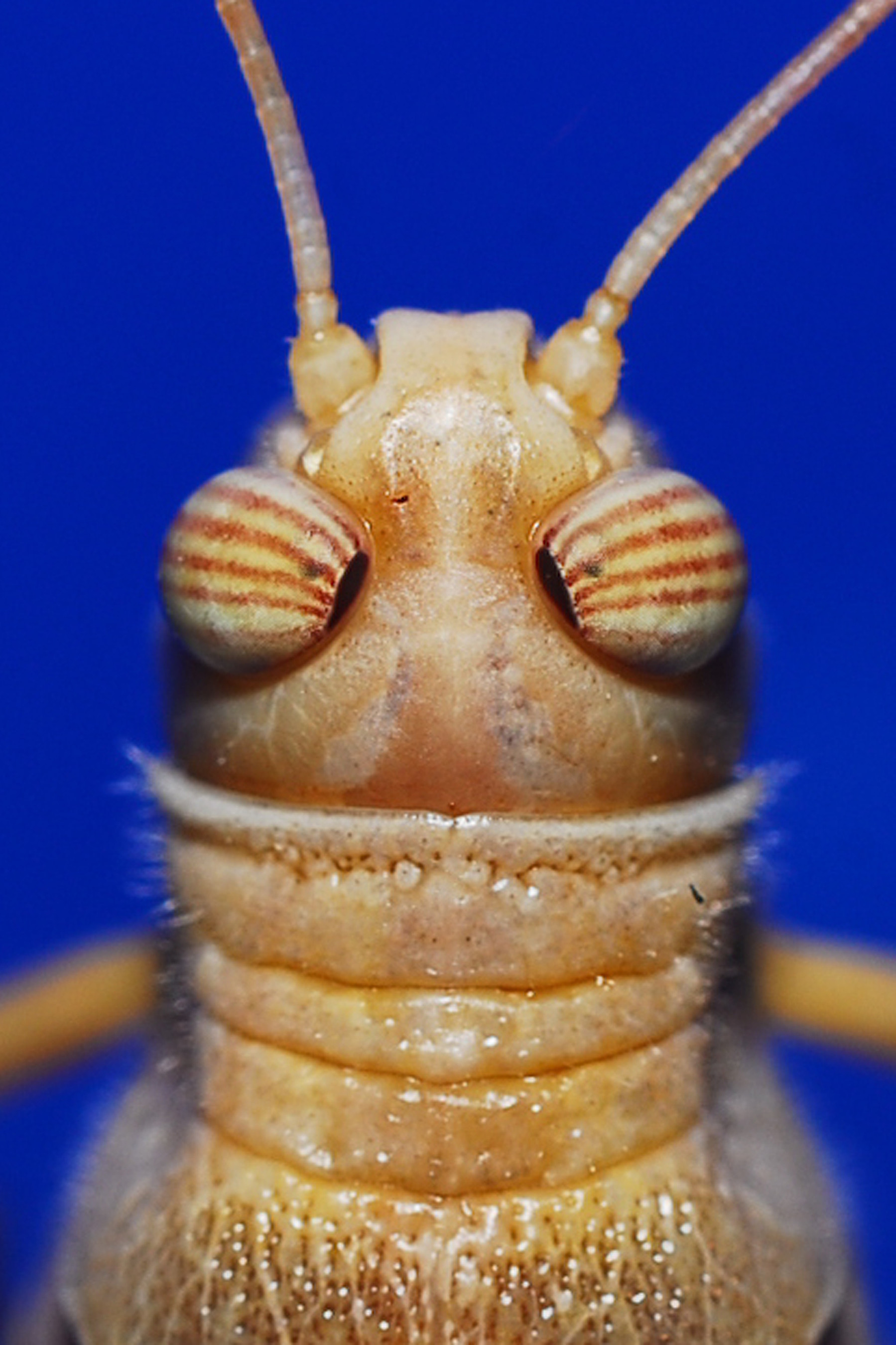
Desert locust
Plagues of locusts have been known since biblical times. Swarms can travel hundreds of kilometres per day and have been estimated to affect the lives of one in ten people on Earth. The forces driving these swarms forward were little understood until quite recently. Aggregations of desert locusts can quickly switch from disordered groups to coordinated forward-moving bands that amass more individuals as they move. Cannibalism is now known to be at the root of these mass movements. When a food source becomes depleted, locusts switch to cannibalism to acquire essential nutrients. This creates a dual response in individuals – the desire to cannibalise and the desire to avoid being cannibalised – resulting in escape-pursuit behaviour. Individuals move to avoid cannibalism from behind (escape) and are attracted to individuals moving in front (pursuit). A locust facing side-on to the flow of a group is more likely to be attacked, forcing them to align in orientation with their neighbours. In large aggregations, these cannibalistic interactions create an autocatalytic feedback, resulting in highly coordinated directional swarms.

Insect Portraits
From bomb-sniffing moths to bacteria threatening to feminise entire insect populations, and flies that have lost their ability to hunt yet still need to present a dead insect as a nuptial gift — along with the ingenious, almost comical strategies they've developed to overcome this evolutionary misstep — this collection promises to transform how you see insects, if you're not already a fan.
Shot in the stunning Burren region of County Clare and surrounding counties, this book celebrates the natural world while unveiling the rich, often surprising, and entertaining lives of insects, creatures so easily overlooked. At a time of devastating biodiversity collapse, it serves as a powerful reminder of the value of these misunderstood beings, nuisance as they can sometimes be, by showcasing their charm and unexpected lighter side.
"Visual treasure trove … inviting and beguiling book that can be dipped into by the young and old."
— Hilary White, Sunday Independent
"The eyes have it! Huge eyes, tiny eyes, round eyes, triangular eyes, multifaceted eyes, rainbow-coloured eyes … who knew there was such variety in the eyes of insects?"
— Éanna Ní Lamhna, author of The Great Irish Biodiversity Book
"Each portrait is a moment of communion — between the lens and the leaf-hopper, the moth and the moss. Her images do not just depict insects; they dignify them."
— Manchán Magan, author of Brehons and Brahmins
"So surprising, eloquent and revelatory that they remind the reader not only of the beauty and significance of the creatures themselves, but all the minutiae which surrounds us."
— Megan Nolan, author of Acts of Desperation and Ordinary Human Failings
"Lisa Clancy's photography elevates the world of insects to a new level, capturing the beauty and essence of all of her subjects in each and every image."
— Eric Dempsey, author, broadcaster and wildlife photographer

About the author
Lisa Clancy is an insect photographer and nature enthusiast based in Galway City. Her passion for the natural world began early and guided her academic journey, starting with a BSc in Zoology from the University of Galway, followed by an MSc in Biological Photography and Imaging from Nottingham University, and culminating in a PhD in Insect Behaviour from Aberystwyth University in Wales in 2015.
In the news
Coverage of Insect Portraits and the May 2025 book launch.
Where Lisa's speaking
Upcoming and past talks and events. Add new dates at the top as they're booked.
Dublin Book Festival — photography workshop
Grangegorman Campus, TU Dublin
Wild Atlantic Words
Event details ↗Ardnaculla Summer School
Event details ↗Bealtaine Garden Festival
Event details ↗Burren in Bloom
Event details ↗Interested in having Lisa speak at a festival, school or event? Get in touch to check availability.
Book a talk